

June 2026 Servi christi event
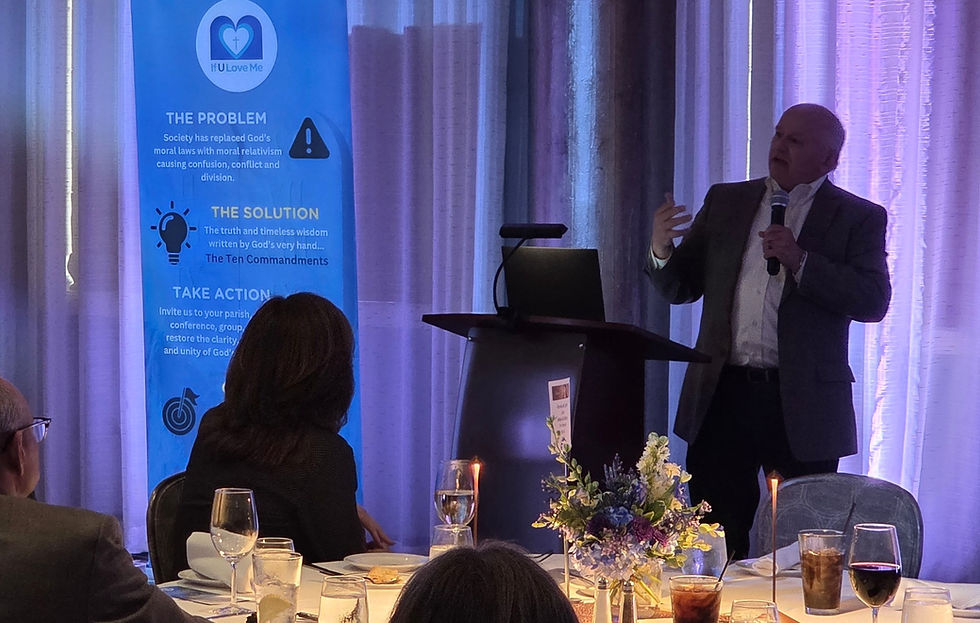
Fr. Jeremy Ploof Was the speaker at the June, ServiChristi event. He is the pastor from the diocese St. Cloud Minnesota. His topic was Christian Ethics in Business.
Fr. Jeremy Ploof’s talk on Christian Ethics in Business centers on aligning one’s professional life with a higher spiritual purpose. He begins by connecting his own background in economics and business aspirations with his vocation to the priesthood, noting the surprising parallels between corporate leadership and pastoral ministry—both involve implementing a vision, guiding people, and ensuring the health of an organization. Grounding his message in Scripture (especially Colossians 3:23–24), he emphasizes that all work should ultimately be done for God rather than merely for human success or recognition.
A central theme of his talk is distinguishing between means and ends. Using the metaphor of the Magi, he explains that the star (wealth, success, business growth) is not the goal, but the stable (serving God, improving lives, supporting family and community) is. He warns against confusing financial success with ultimate purpose, instead encouraging business leaders to view profits as a tool to achieve deeper goods. Work itself, he notes, is inherently good—existing even before sin—and can be a way of participating in God’s creative plan when approached with the right intention.
Fr. Ploof also highlights that ethical business leadership requires proper motivation and a well-ordered life. Drawing on both Scripture and modern thought (such as Arthur Brooks), he identifies the foundations of meaningful success as faith, family, friendships, and service. He integrates biblical wisdom about wealth and stewardship, cautioning that poorly gained or misused money leads to instability, while integrity and purpose create lasting impact. In this way, business becomes not just an economic activity but a form of witness—where one’s actions can draw others closer to God.
Finally, he offers a practical and hopeful mindset for living out Christian ethics in the workplace. Through the concept of “nunc coepi” (“now I begin”), he encourages constant renewal, resilience, and active repentance—never settling for mediocrity or allowing failure to define one’s path. Ethical business practice, in his view, is an ongoing process of striving, recalibrating, and beginning again with faith and determination. Ultimately, he calls professionals to “fight the good fight,” using their work as a platform to lead by example and share the Gospel through both actions and character.



Comments